Polycarbonate Sheet for Heavy Equipment and Water Treatment
 November 24, 2026

What an excavator guard and water treatment enclosure have in common. On the surface, an excavator's transparent machine guard and a control panel enclosure at a water treatment plant have nothing to do with each other, different industries, different equipment, different problems to solve. Look closer and they are frequently built from the same sheet of plastic.
Polycarbonate shows up in both because it solves the same underlying problem: something needs to protect people or equipment, stay clear or translucent when visibility matters, and survive conditions that would crack a more brittle plastic or corrode bare metal.
Why Heavy Equipment Manufacturers Specify Polycarbonate

Heavy equipment runs in conditions that punish materials, vibration, impact, temperature swings, and constant exposure to the elements. Polycarbonate holds up to all of it better than most alternatives in transparent applications. It has roughly ten times the impact resistance of acrylic, keeps its strength across a wide temperature range, and does not become as brittle in cold weather the way some plastics do. That combination is why it is the standard choice for transparent machine guards, equipment enclosures, and safety windows on excavators, loaders, and other heavy equipment that operates in rough environments.
Where It Shows Up in Water and Wastewater Facilities

Polycarbonate is not the material you would reach for on a tank that holds corrosive chemicals, that is where polypropylene or PVC tend to win, but it earns its place in a treatment facility in a different way. Sight glasses and viewing windows on tanks and filtration equipment, control panel enclosures that need to be weatherproof and impact-resistant, and splash guards around pumps and blowers all lean on the same clarity-plus-toughness combination that makes it useful in heavy equipment. It is frequently the material specified anywhere a facility needs to see what is happening inside a process without compromising on durability. See more of how we support water and wastewater facilities.
Expert Insight: Getting Impact and Scratch Resistance in One Guard
We had a customer that had an unspecified application but were frustrated with breakage on their clear guards. Midland Plastics was able to supply the part complete, out of polycarbonate which eliminated their breakage issues, but led to issues with scratches and scuffs to the point where the product could not be used within a short period of time. The customer came back to Midland Plastics describing the struggles of liking the scratch resistance of the previous material (Acrylic) and the impact of the new material (polycarbonate) and wanted something having both characteristics.
After discussions on the working environment, Midland Plastics was able to specify in a hard coated polycarbonate that gave them superior abrasion and chemical resistance with the impact associated with polycarbonate. Their complaints went away and their customers were happy.
Another example of why having all the information is going to improve material selection while reducing long term results and improve customer satisfaction.
From Sheet to Part: Fabricating Polycarbonate
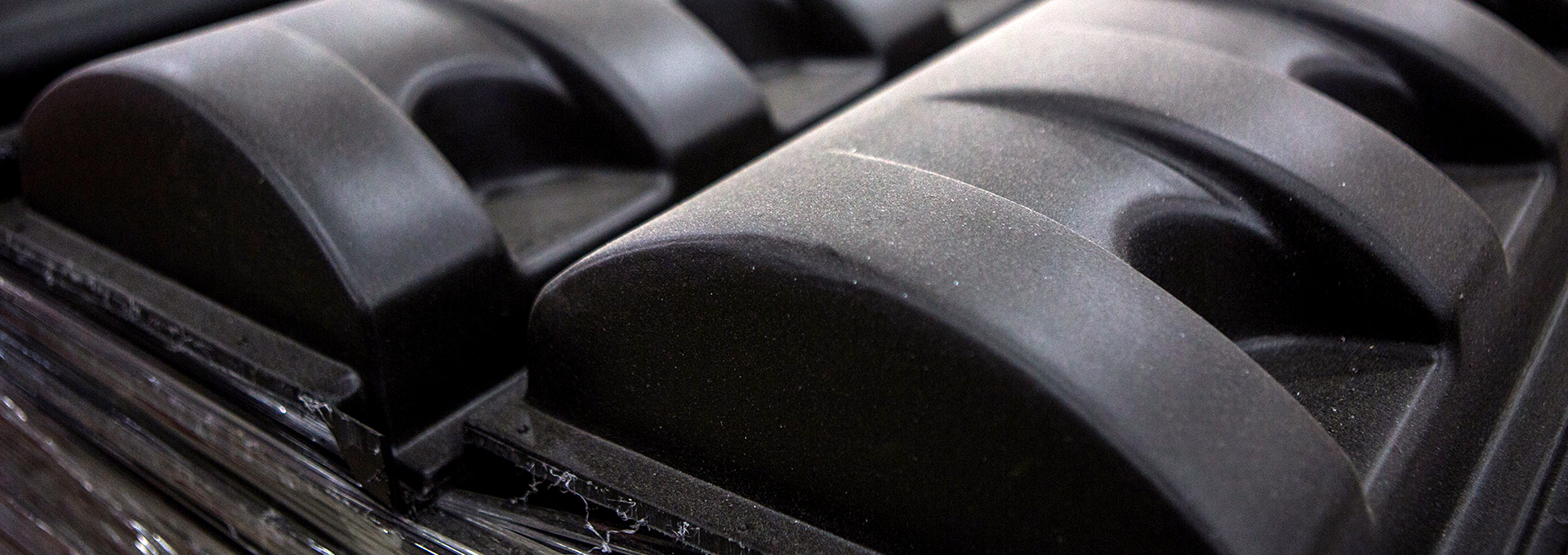
Getting from flat stock to a finished guard, enclosure, or panel typically involves:
- Thermoforming
Heating and forming the sheet over a mold to create contoured guards, covers, and housings that need to match the shape of the equipment they protect.
- CNC routing and machining
Cutting mounting holes, cutouts, and precise edge profiles so a panel fits directly into an existing frame or enclosure. Parts with compound angles or multiple mounting faces often call for 5-axis CNC routing to machine the geometry in a single setup.
- Bending
Forming angled brackets and panel returns without the tooling cost of a mold, useful for lower-volume or custom enclosure runs.
- Polishing and finishing
Sand and buff polishing cut edges on panels where clarity and a clean finish matter, such as viewing windows and sight glasses.
Expert Insight: Forming Without Losing Clarity
When shaping polycarbonate, one needs to keep in mind that whenever the material is bent or stretched the clarity is affected and the opportunity for small amounts of foreign substance contamination increases. Colored or textured material helps with camouflaging this effect. If optical clarity is a critical function keeping the polycarbonate sheet as close to flat in the viewing area greatly reduces distortion.
Polycarbonate vs. Other Stock Plastics

Polycarbonate is often compared to acrylic for clear fabricated parts, and the two solve different problems. Acrylic offers better optical clarity and scratch resistance, while polycarbonate wins decisively on impact strength, which is why it is the default choice for safety-critical guards and enclosures rather than static displays. Our guide on acrylic vs. polycarbonate for fabrication walks through the tradeoffs in more detail.
Sourcing and Fabrication Under One Roof
Midland Plastics stocks polycarbonate sheet and fabricates it in-house with thermoforming, CNC routing, bending, and finishing, backed by direct experience serving both the heavy equipment and water and wastewater industries.
If you are specifying a guard, enclosure, or viewing panel, request a quote and our engineering and fabrication team can help you work through thickness, finish, and fabrication method before cutting begins.
Frequently Asked Questions
FAQs | Polycarbonate Sheet for Heavy Equipment and Water Treatment
Yes, polycarbonate is one of the most impact-resistant clear plastics available, roughly ten times tougher than acrylic, which is why it is a standard choice for safety guards and enclosures in demanding equipment applications.
Polycarbonate has more limited chemical resistance than materials like polypropylene or PVC, so it is better suited to enclosures, guards, and viewing windows than to direct, sustained contact with process chemicals. Our team can help confirm the right material for a specific exposure.
Polycarbonate wins on impact resistance and toughness, while acrylic offers better optical clarity and scratch resistance. See our acrylic vs. polycarbonate comparison for a full breakdown.
It depends on the impact requirements and mounting configuration of the equipment. Midland's fabrication team can help specify the right thickness and mounting approach based on the application.
Yes, Midland fabricates guards, enclosures, and safety panels for heavy equipment applications, using thermoforming, CNC routing, and bending to match the equipment they protect.
We use both 3-axis and 5-axis CNC routing depending on part geometry, along with dedicated machining and finishing equipment for cut edges.
You can request a quote directly from our site with your part specs, thickness requirements, and application details.
Ready to discuss your project?
Contact Midland Plastics to talk through material selection, fabrication method, tolerances, and lead time. Reach out at 833-372-3113 and let’s discuss your project.
About the Author
Terry Stephens
Director of Sales & Technical Support
Terry has more than 37 years of managerial experience in the plastics industry. Since joining Midland Plastics in 2000, he has held process, operations and leadership roles, with hands-on experience in thermoforming, injection and blow molding, machining and fabrication. Today he helps engineers, manufacturers and procurement teams choose the right materials and processes for their applications.