Thermoforming vs. Injection Molding: Which Is Right for Your Plastic Part?
 June 17, 2026
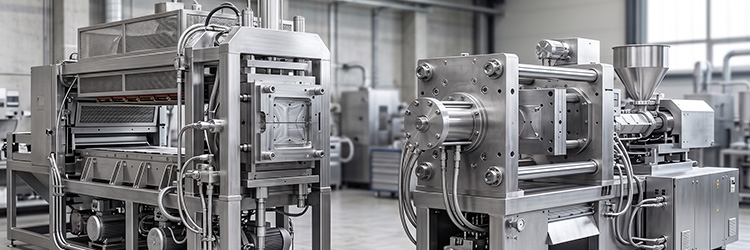
When you are specifying a plastic part and trying to choose a fabrication method, the thermoforming vs. injection molding question comes up early. Both processes produce durable plastic parts. Both are widely available. But they are suited to very different kinds of projects, and choosing the wrong one adds cost, extends lead times, and can create problems that are expensive to fix once tooling is built.
This guide walks through how the two processes work, what each does best, where each falls short, and how to think through the decision for your specific part.
Midland Plastics offers custom thermoforming (vacuum forming, pressure forming, and twin-sheet forming) along with in-house CNC machining, bonding, and finishing, so thermoformed parts can be completed under one roof.
How Each Process Works
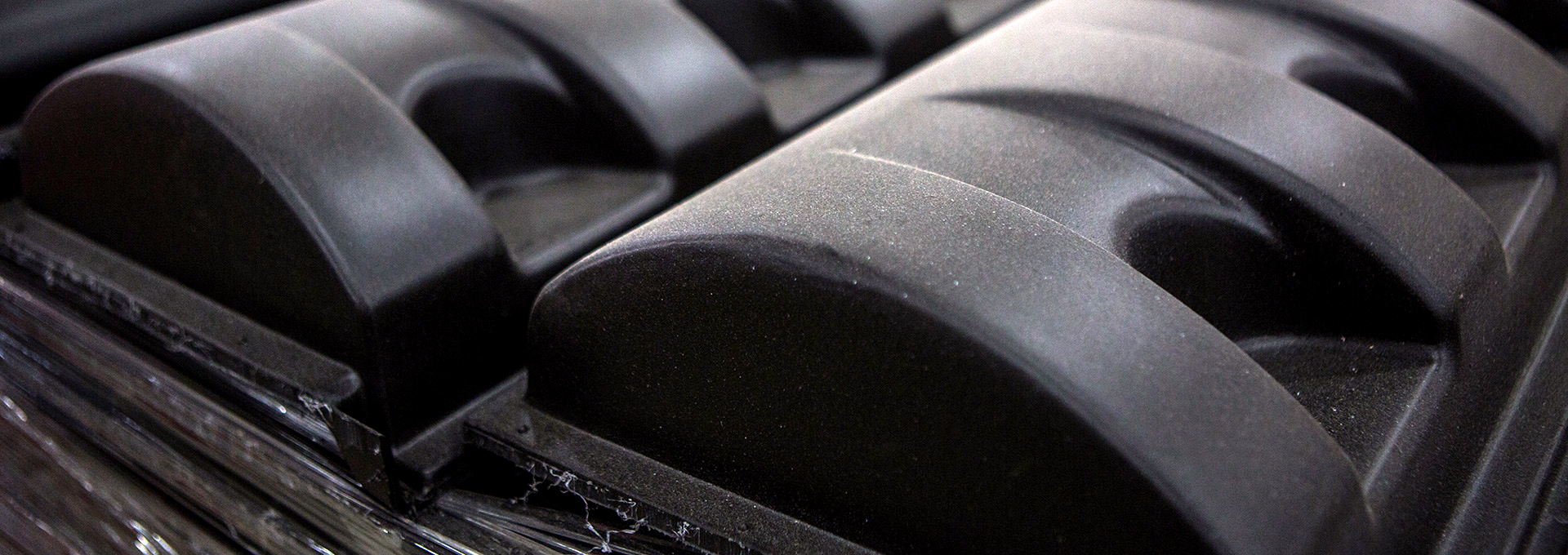
Thermoforming starts with a flat sheet of thermoplastic material. The sheet is heated until pliable, then shaped over a mold using vacuum pressure, air pressure, or mechanical force. Once cooled, the part holds its shape and is trimmed to final dimensions.
The molds used in thermoforming are typically single-sided and made from aluminum or composite materials. This keeps tooling costs lower and lead times shorter compared to injection molding. Thermoforming works well for large-format parts, enclosures, housings, trays and components where contoured surfaces and broad coverage matter more than fine interior detail.
One characteristic to understand: wall thickness varies in thermoformed parts. Material thins at areas that are drawn deeply into the mold, and thickens where the sheet contacts the mold first. This is manageable through design, and Midland’s engineering team accounts for it during design review, but it is a real difference from injection molding, where wall thickness is much more uniform.
Injection Molding
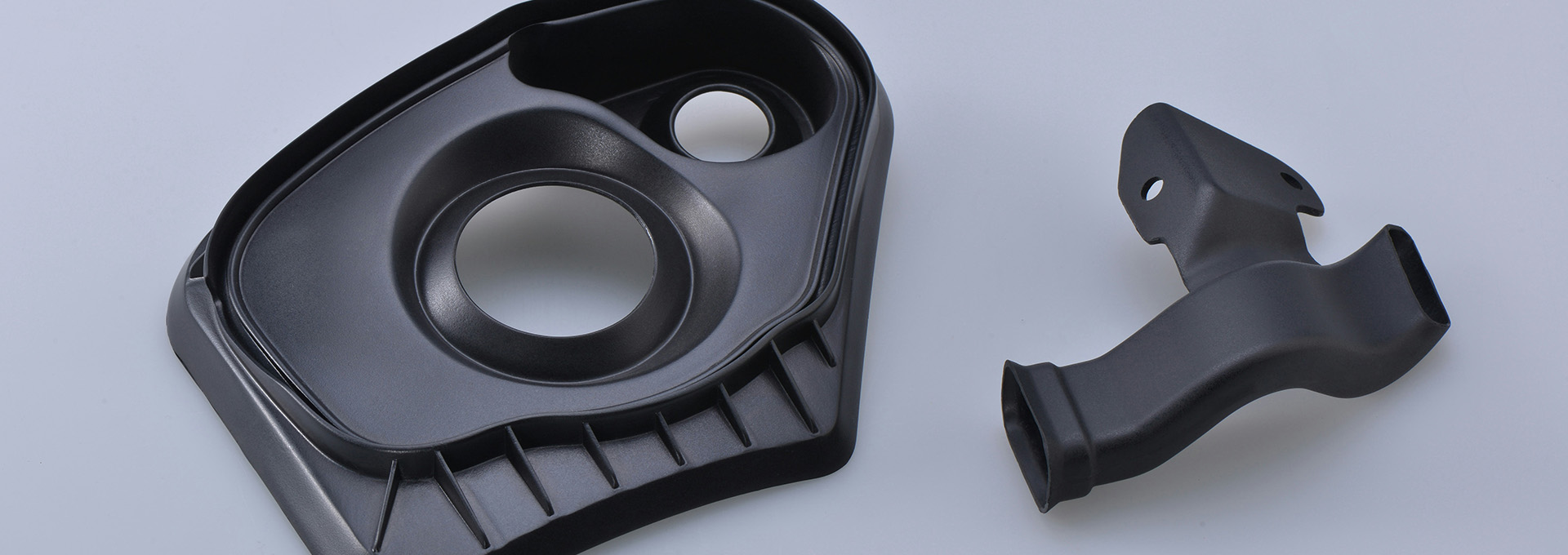
Injection molding melts plastic pellets and injects the molten material into a closed, double-sided mold under high pressure. The material cools inside the mold and is ejected as a finished part.
Injection molds are typically machined from hardened steel and are far more complex and expensive to produce than thermoforming tooling. However, once the mold is built, injection molding can produce high volumes of identical parts quickly, with consistent wall thickness, tight tolerances, and complex interior geometry, including ribs, bosses, undercuts, and snap fits that thermoforming cannot achieve.
The tradeoff is upfront cost and lead time. Injection molds routinely cost tens of thousands to hundreds of thousands of dollars and take months to build. For high-volume production of complex small parts, that investment pays off. For lower volumes, large parts, or parts still likely to change, it often does not.
Side-by-Side Comparison | Thermoforming vs Injection Molding
| Factor | Thermoforming | Injection Molding |
|---|---|---|
| Tooling cost | Lower. Molds are typically made of aluminum or composite materials, are simpler to build, and are faster to deliver. Often 5–10x less than an equivalent injection mold. | Higher. Steel molds are complex, precision-machined, and expensive. |
| Tooling lead time | Faster. Typically weeks rather than months. | Longer. Mold design, machining, and validation take significant time. |
| Best part size | Medium to large parts, panels, enclosures, and covers. | Small to medium parts with fine detail and complex interior geometry. |
| Part complexity | Excellent for contoured 3D shapes, enclosures, and covers. Limited interior detail. | Better for intricate geometry, undercuts, ribs, bosses, and tight tolerances. |
| Wall thickness uniformity | Wall thickness varies across the part; areas drawn deeply into the mold thin out. | Highly uniform, controlled wall thickness throughout the part. |
| Production volume | Cost-effective from prototype through mid-volume. For large parts, competitive at higher volumes too. | Most cost-effective at high volumes where tooling investment is fully amortized. |
| Per-unit cost at scale | Higher per-unit cost at very high volumes for small parts. | Lower per-unit once tooling cost is recovered, especially for small, complex parts. |
| Material flexibility | Wide range of thermoplastic sheet materials: ABS, PETG, acrylic, polycarbonate, polyethylene, polypropylene, and more. | Wide range of thermoplastic pellets and engineering resins. |
| Prototyping speed | Faster and less expensive for early iterations. Molds can be modified more easily. | Slower and more expensive. Mold changes are costly and time-consuming. |
| Secondary operations | Trimming, drilling, bonding, and CNC machining are often required after forming. | Parts typically eject closer to finished geometry with less post-processing. |
When Thermoforming Is the Better Choice
Thermoforming tends to be the right answer when one or more of the following apply to your project:
- Your part is large or has a significant surface area
Thermoforming handles large panels, enclosures, covers, and housings efficiently. Injection molding becomes difficult and expensive as part size increases; molds get enormous, press tonnage requirements rise, and cycle times lengthen.
- You need low-to-mid volume production
For small to medium parts, thermoforming is typically more cost-effective than injection molding up to roughly 3,000 to 5,000 units per year. For large parts, thermoforming can remain competitive at significantly higher volumes.
- Tooling budget is limited
Thermoforming tooling typically costs a fraction of an equivalent injection mold, often 5 to 10 times less. If tooling investment is constrained, thermoforming gets you to production faster and with less financial exposure.
- Design changes are still likely
Aluminum thermoforming molds are far less expensive to modify than hardened steel injection molds. If your design is still evolving, thermoforming limits the cost of getting it wrong.
- Timeline is a priority
Thermoforming tooling is built faster than injection molds. For projects where speed to the first part matters, thermoforming typically delivers.
When Injection Molding Is the Better Choice
Injection molding tends to be the right answer when:
-
Your part is small with complex interior geometry
Ribs, bosses, undercuts, snap fits, and fine interior detail are injection molding’s strengths. Thermoforming cannot achieve these features.
-
You need very tight, uniform tolerances across the part
Injection molding’s closed-mold process produces consistent wall thickness and tighter tolerances than thermoforming on small, intricate parts.
-
Production volumes are very high
At high volumes for small parts, above roughly 10,000 units per year, injection molding’s lower per-unit cost typically overcomes its higher tooling investment.
-
Parts eject near-finished
Injection molded parts typically require less post-processing than thermoformed parts, which almost always need trimming and often need secondary machining.
Understanding the Volume Threshold
The most common question in this comparison is:
At what volume does injection molding become more cost-effective?
The honest answer is that it depends, and part size is the most important variable.
Small- to medium-sized parts
The crossover typically falls between 3,000 and 10,000 units. Below that range, thermoforming’s lower tooling cost, often five to ten times less than an equivalent injection mold, offsets its higher per-unit cost.
Large parts
The equation shifts further in thermoforming’s favor. Injection mold tooling costs and press size requirements increase significantly as parts get bigger, which means thermoforming can remain the more economical choice even at higher production volumes.
Examples where thermoforming often wins at volumes that would otherwise favor injection molding for smaller components.
- Machine guards
- agricultural panels
- equipment enclosures
- Industrial covers
The right threshold for your part depends on size, complexity, material, and how volumes are expected to change over time. Midland’s engineering team works through this evaluation as part of the quoting process, at no charge.
What This Means When Working With Midland
Midland is a thermoformer, which means we have a clear stake in thermoforming. But the right answer for your part is the right answer. If a part is genuinely better suited to injection molding, we will say so rather than push you toward a process that is not the best fit.
What we do well is the full range of work a thermoformed part requires:
- Vacuum forming
- Pressure forming
- Twin-sheet forming
- CNC trimming
- 5-axis routing for complex formed parts
- Bonding
- Hardware insertion
- Assembly
- Finishing
Keeping those steps in-house means fewer handoffs, tighter tolerances across operations, and a simpler supply chain for you.
When you bring us a part, our engineering team reviews the design before quoting to confirm the right process, flag anything that will affect cost or lead time, and suggest changes that improve manufacturability without compromising the design. That review is part of the quoting process, not a separate step.
Frequently Asked Questions
FAQs | Thermoforming vs Injection Molding
These are the questions engineers and buyers most commonly ask when evaluating thermoforming versus injection molding. Where relevant, we’ve linked to related pages on the Midland site.
Thermoforming heats a plastic sheet and shapes it over a single-sided mold using vacuum or pressure. Injection molding melts plastic pellets and injects the molten material into a closed, double-sided mold under high pressure. The key practical differences are tooling cost, part-size capability, geometric complexity, and the production volumes each method handles most cost-effectively.
It depends heavily on part size and complexity, which is why a single number is misleading. For small to medium parts, the crossover typically falls between 3,000 and 10,000 units, where injection molding’s lower per-unit cost begins to offset its higher tooling investment. For large parts such as enclosures, panels, and agricultural covers, thermoforming often remains the more economical choice at much higher volumes, because injection mold tooling and press requirements scale unfavorably with part size. If you are evaluating this for a specific part, Midland’s engineering team can model the real break-even for your application.
Thermoforming tends to be the better choice when parts are large, when tooling budgets are limited, when timelines are tight, or when design changes are still likely. It is also the stronger option for mid-volume production of large components, where injection molding tooling costs and machine requirements make it less practical regardless of unit count.
Thermoforming produces good dimensional consistency for most enclosures, housings, and structural components, but it does not match the tolerance capability of injection molding for small, intricate features. If your part requires tight tolerances on fine interior features, bosses, or undercuts, injection molding is typically the better fit. For thermoformed parts that need precise features added, such as holes, cutouts, and trimmed edges, Midland’s in-house CNC machining and 5-axis routing can achieve tight tolerances after forming. See our machining and routing capabilities for more details.
Midland thermoforms a wide range of thermoplastic sheet materials, including ABS, acrylic, PETG, polycarbonate, polyethylene (HDPE and LDPE), polypropylene, and KYDEX. Material selection depends on the application. Impact resistance, chemical exposure, UV stability, FDA compliance, and temperature range all factor into the right choice. Our plastic materials overview covers the full range of Midland stocks and fabricates.
Midland offers vacuum forming, pressure forming, and twin-sheet forming. Vacuum forming uses atmospheric pressure to draw a heated sheet over a mold and is the most straightforward and economical option for many applications. Pressure forming adds positive air pressure for sharper detail and better surface quality. Twin-sheet forming bonds two sheets together to create hollow, double-walled parts with structural rigidity. The right method depends on part geometry, required surface quality, and production volume. Learn more on our thermoforming capabilities page.
Yes. Midland handles thermoforming, CNC trimming and machining (including 5-axis routing for complex formed parts), bonding and assembly, and finishing under one roof. This matters because thermoformed parts almost always require secondary operations: trimming to final dimensions, drilling, hardware insertion, and joining to other components. Keeping those steps in-house reduces handling, preserves dimensional consistency, and simplifies your supply chain. See our full fabrication capabilities overview.
Ready to discuss your project?
Contact Midland Plastics to talk through material selection, fabrication method, tolerances, and lead time. Reach out at 833-372-3113 and let’s discuss your project.